32 Best Exterior House Colors in 2026
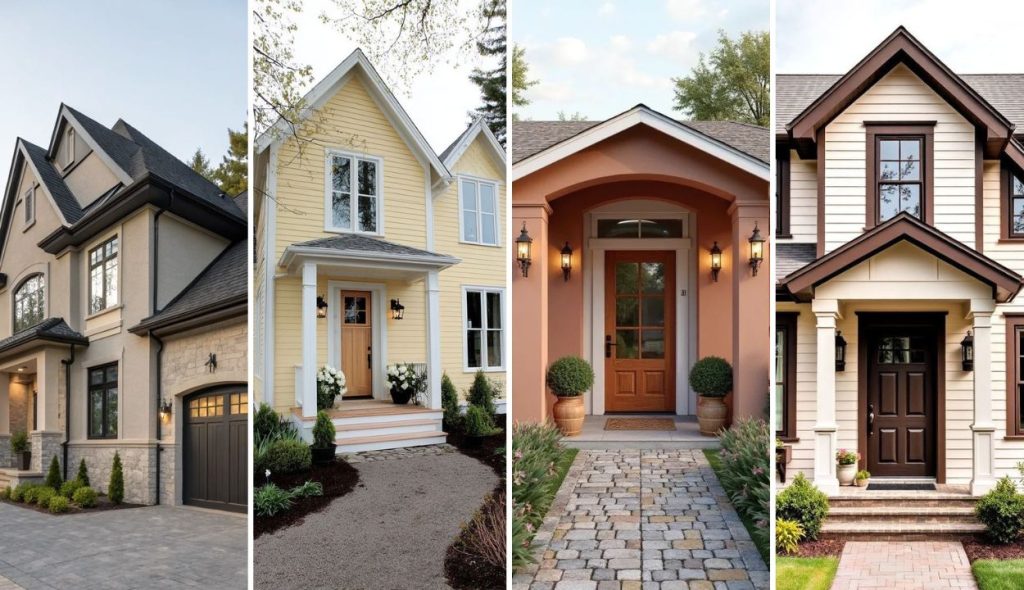
Choosing the right exterior house color can completely transform a home’s curb appeal in 2026. Modern homeowners are embracing shades that feel sophisticated, welcoming, and effortlessly timeless. From warm neutrals and earthy greens to dramatic charcoal and refined blue tones, options are more versatile than ever.
A carefully selected color can highlight architectural details while creating a polished connection with surrounding landscaping. Popular palettes also combine contrasting trim, natural wood accents, and darker doors for added visual depth.
Whether a home has a traditional, contemporary, farmhouse, or minimalist design, there is a beautiful combination worth exploring. These 32 best exterior house colors in 2026 offer fresh inspiration for creating a stylish and memorable first impression.
32 Best Exterior House Colors in 2026 Ideas
1. Warm Ivory with Charcoal Trim
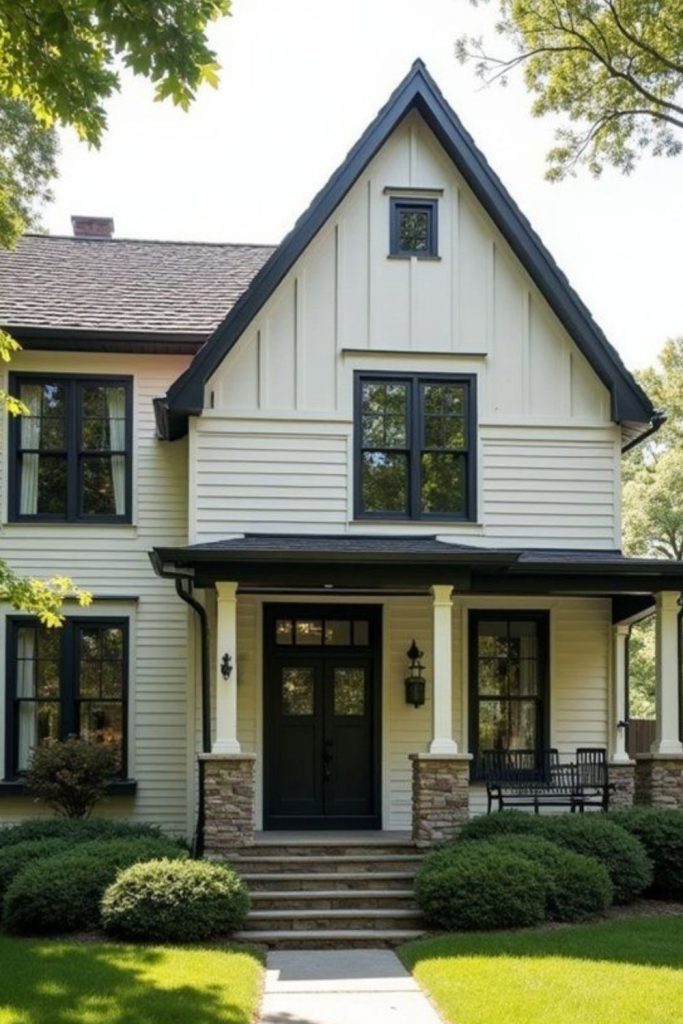
Warm ivory creates a welcoming facade with gentle visual softness. Charcoal trim adds crisp definition around windows, doors, and rooflines.
Together, these shades create a polished appearance without feeling overly formal. Natural stone accents can deepen this palette with earthy texture.
Wooden shutters or a cedar door bring extra warmth into this scheme. This combination suits traditional cottages, modern farmhouses, and suburban homes beautifully.
2. Sage Green with Cream Accents
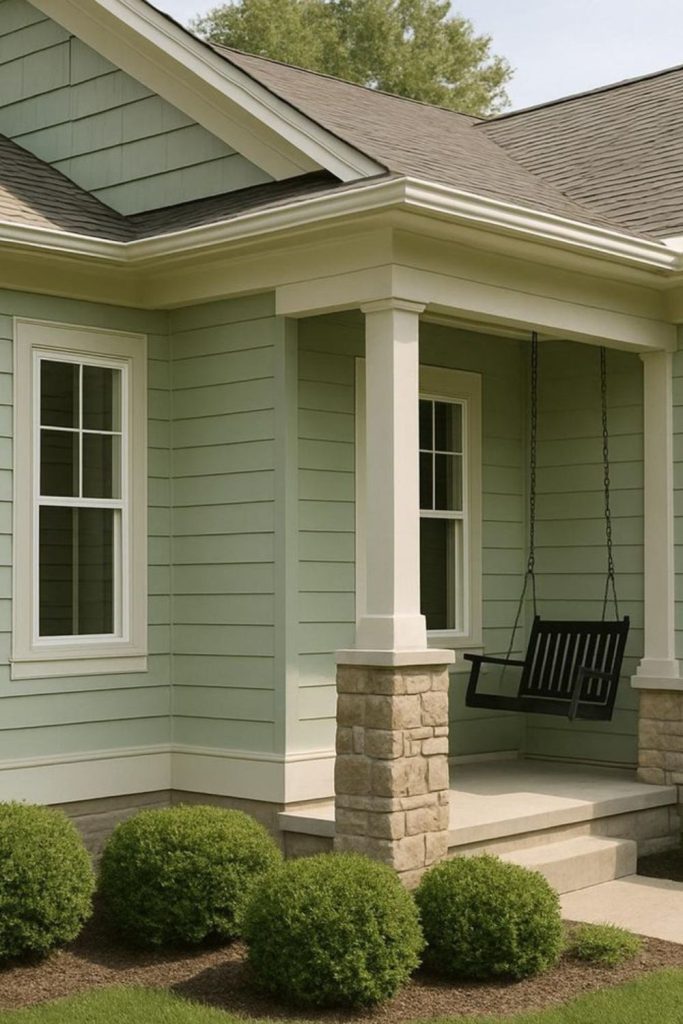
Sage green brings a muted botanical character across an exterior facade. Cream accents soften window frames while keeping architectural features noticeable.
This pairing feels relaxed, especially beside mature trees or landscaped gardens. A dark bronze door can introduce subtle contrast near an entryway.
Natural wood details work wonderfully against this gentle green backdrop. For 2026, this earthy palette offers charm without looking overly trendy.
3. Deep Navy with Crisp White
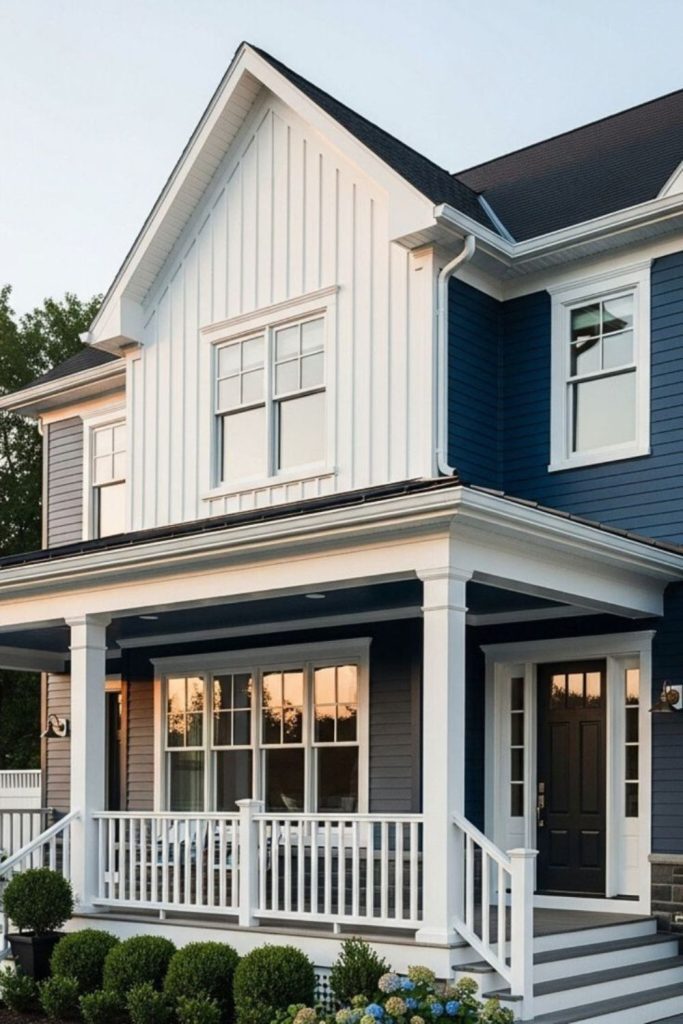
Deep navy gives a home dramatic curb appeal with sophisticated coastal energy. Crisp white trim creates sharp contrast around windows and architectural edges.
This color story works particularly well across contemporary or colonial-style houses. Brass lighting fixtures can add a quietly luxurious accent near entry areas.
Pale stone pathways balance navy walls with softer outdoor textures. A navy exterior feels confident while remaining remarkably timeless.
4. Soft Greige with Black Details
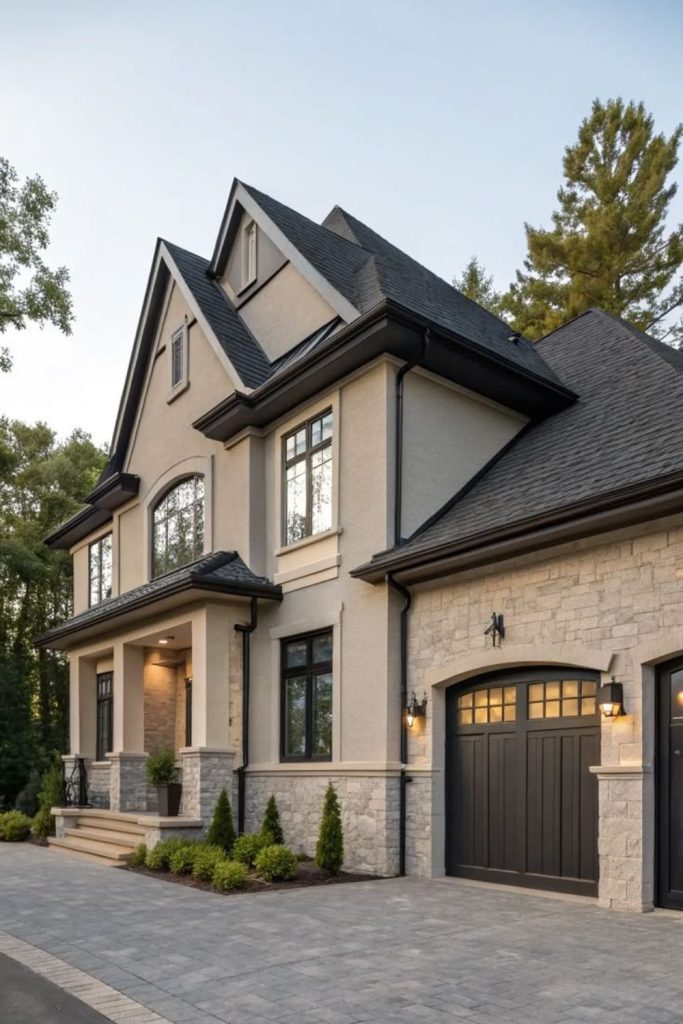
Soft greige blends gray and beige into a remarkably adaptable exterior shade. Black details provide stronger punctuation around doors, gutters, and window frames.
This pairing feels modern without abandoning warmth or residential character. Concrete steps and natural stone can reinforce its understated personality.
A walnut-colored front door introduces organic contrast beside darker accents. Greige remains especially appealing for homeowners seeking refined neutral curb appeal.
5. Terracotta with Sandstone Cream
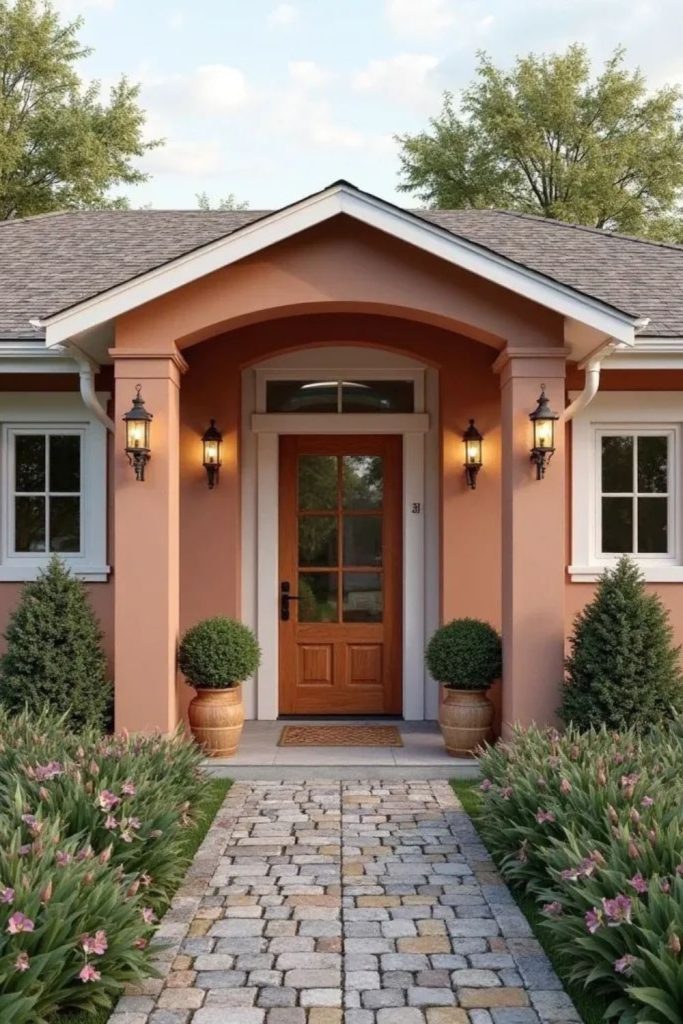
Terracotta brings sunbaked warmth reminiscent of Mediterranean villas and desert landscapes. Sandstone cream balances its intensity with a pale earthy presence.
This palette feels especially inviting across stucco houses with arched architectural details. Dark wood doors can enrich this combination near entryways.
Copper fixtures add another layer of warm visual character. For sunny climates, terracotta creates an exterior full of personality and glow.
6. Forest Green with Natural Wood
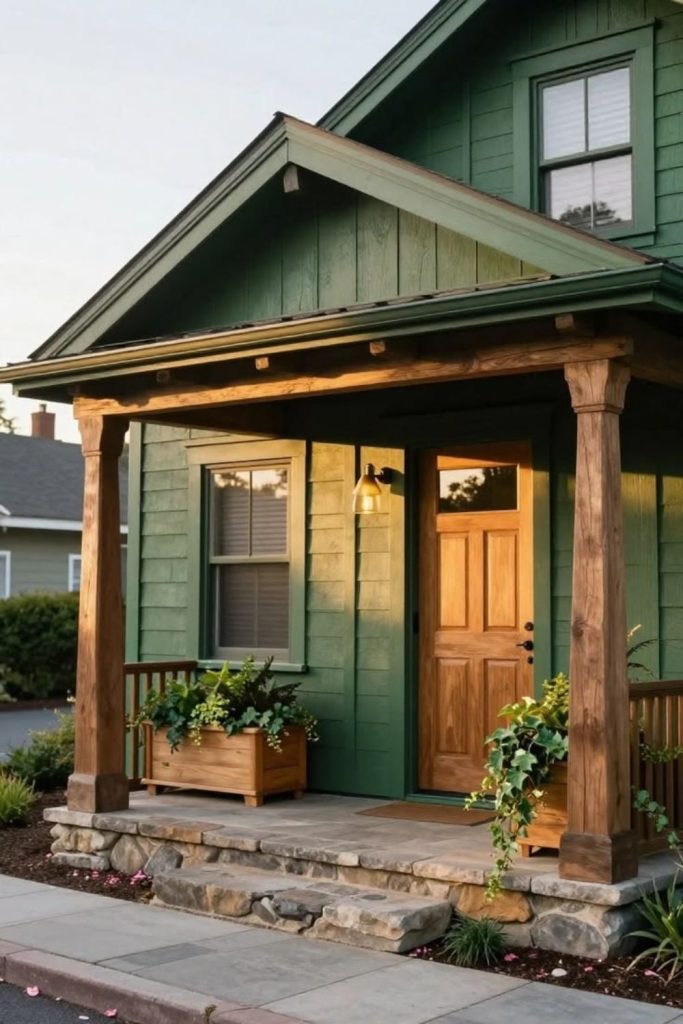
Forest green creates a rich facade that feels connected with surrounding landscapes. Natural wood accents soften its depth while introducing rustic visual texture.
This pairing looks striking against stone foundations or gravel pathways. Matte black hardware can quietly sharpen windows and exterior doors.
Cream-colored trim prevents darker green walls from becoming visually heavy. Forest green works beautifully for cabins, craftsman homes, and modern retreats.
7. Dusty Blue with Warm White
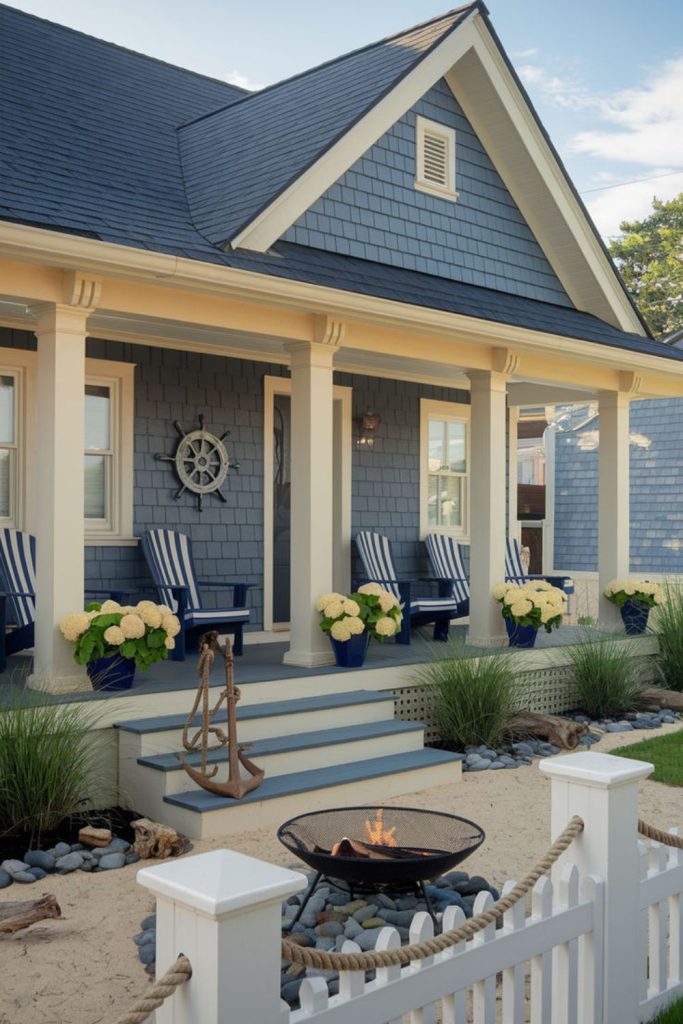
Dusty blue offers a soft exterior appearance with understated coastal charm. Warm white trim creates definition without producing harsh visual contrast.
This combination suits clapboard homes, cottages, and relaxed farmhouse designs. A weathered wood door can add character near a welcoming porch.
Muted landscaping complements blue walls without overwhelming their delicate tone. For 2026, dusty blue feels fresh while retaining classic residential appeal.
8. Classic White with Graphite Gray
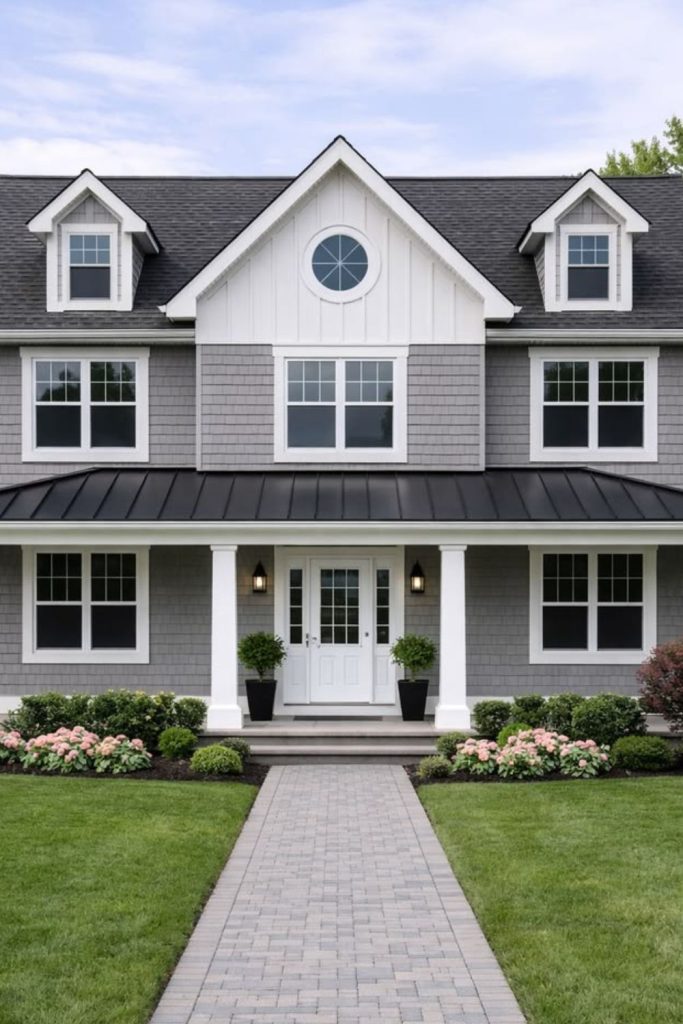
Classic white keeps a home’s exterior bright, clean, and visually expansive. Graphite gray introduces sophisticated contrast around roofing, doors, and trim.
This palette feels particularly strong across modern farmhouse architecture. Blackened metal lighting can reinforce its crisp contemporary personality.
Natural greenery adds softness against a predominantly monochromatic facade. White and graphite remain reliable choices for effortless curb appeal.
9. Clay Beige with Espresso Brown
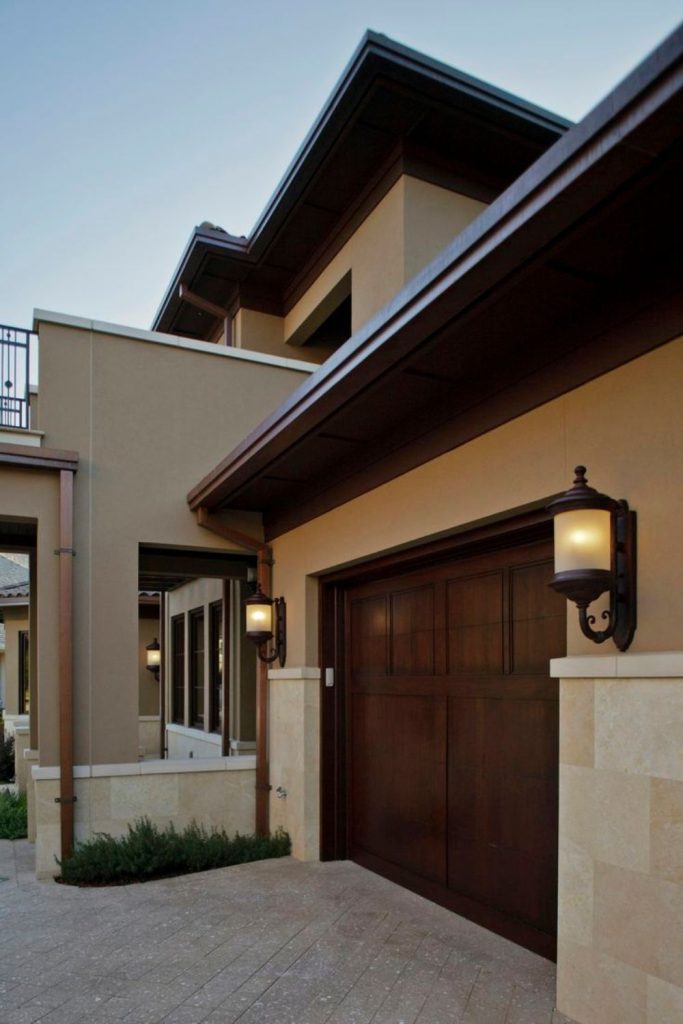
Clay beige provides a warm neutral foundation with subtle earthy undertones. Espresso brown adds depth around doors, shutters, and selected architectural features.
This combination feels cozy without becoming excessively rustic or visually dated. Stone pathways can echo beige tones while creating a cohesive outdoor setting.
A deep wooden entrance door completes this grounded palette beautifully. Clay beige works especially well for ranch homes and transitional exteriors.
10. Pale Gray with Soft Black
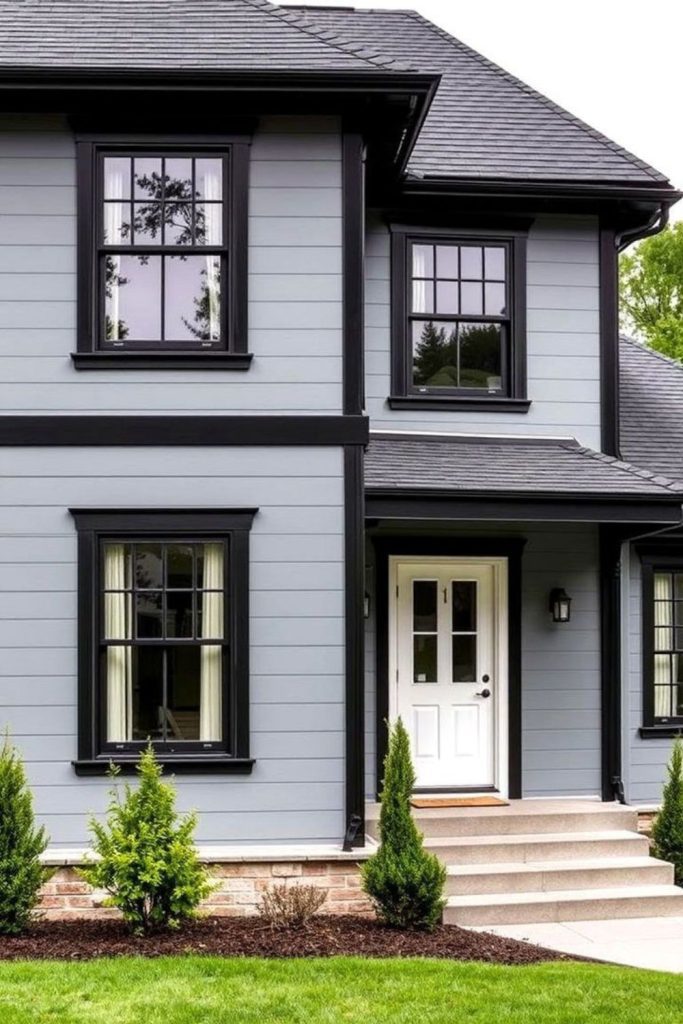
Pale gray offers a refined backdrop for homeowners favoring understated sophistication. Soft black trim creates contrast without producing an overly severe appearance.
This pairing looks elegant across contemporary homes with clean architectural lines. Cedar accents can introduce warmth around porches, garage doors, or entryways.
Simple landscaping keeps attention focused on balanced exterior proportions. Pale gray remains versatile across changing design trends and seasons.
11. Creamy Beige with Olive Green
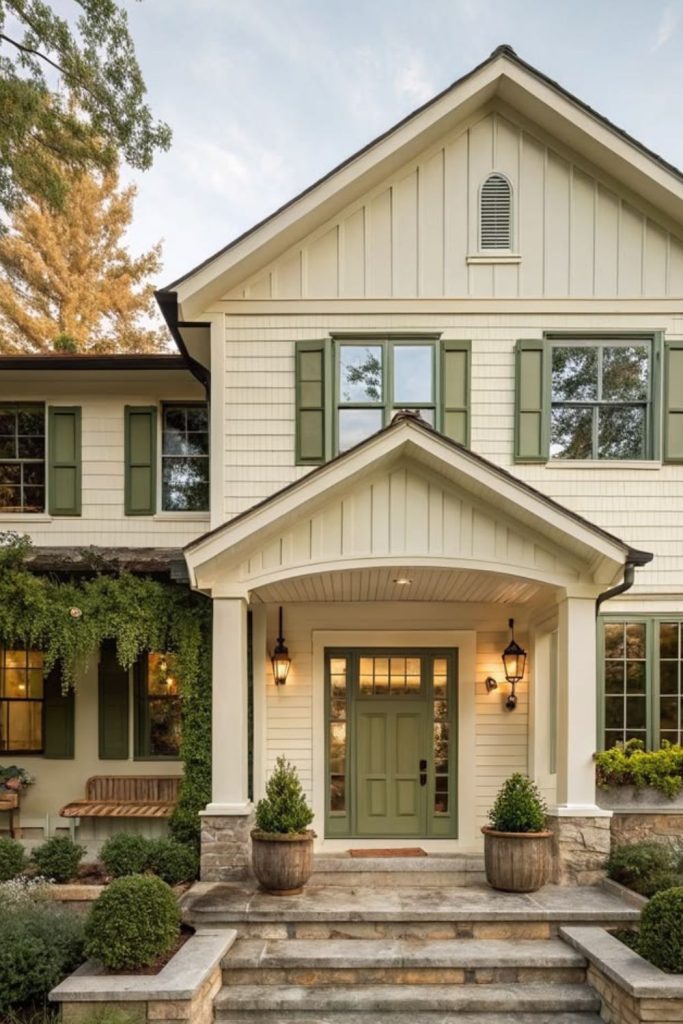
Creamy beige creates a gentle foundation that feels warm under natural sunlight. Olive green adds an organic accent with a slightly vintage personality.
This combination pairs beautifully with brick pathways and mature garden greenery. A stained wood door can strengthen its welcoming country-house character.
Bronze fixtures blend naturally with both earthy shades. Together, these colors create a relaxed facade with enduring visual appeal.
12. Charcoal Gray with Natural Cedar
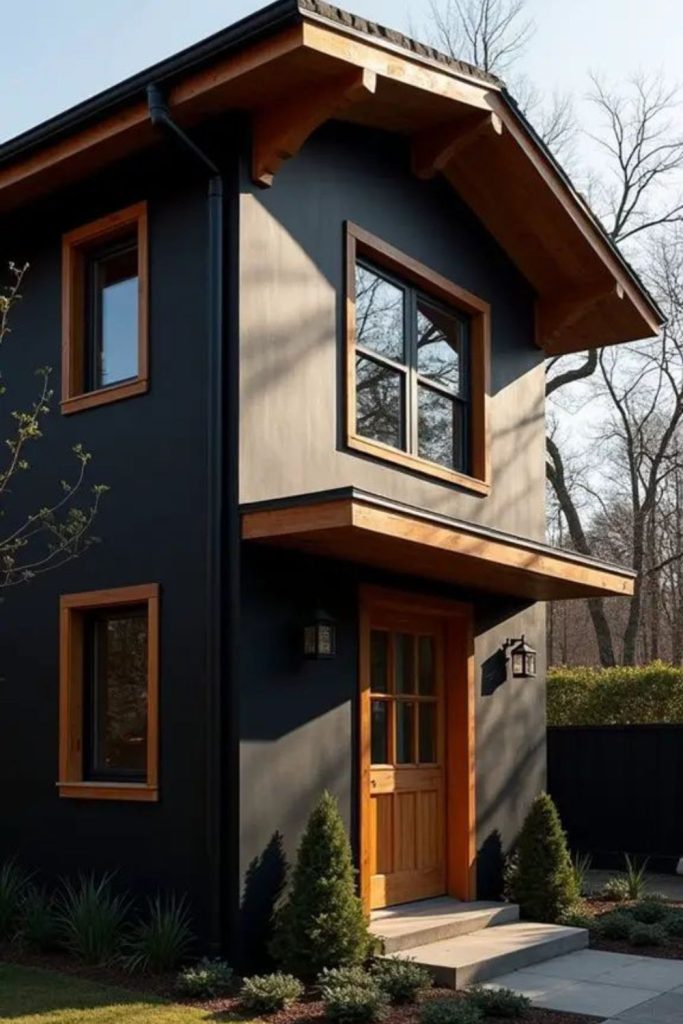
Charcoal gray delivers a bold exterior appearance with modern architectural energy. Natural cedar introduces golden warmth that prevents darker walls from feeling cold.
This contrast works particularly well across contemporary cabins and minimalist houses. Large windows can further enhance this dramatic light-and-dark relationship.
Matte black fixtures quietly reinforce its sleek personality. Charcoal and cedar create a memorable facade with strong 2026 appeal.
13. Buttercream Yellow with White Trim
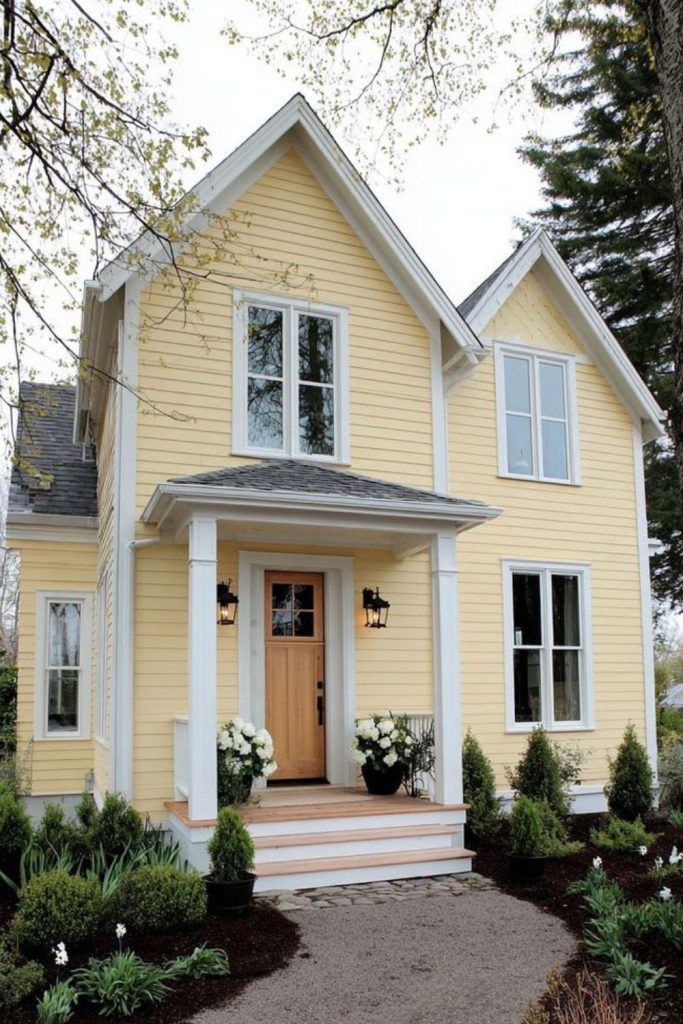
Buttercream yellow brings cheerful warmth without becoming overwhelmingly bright. White trim highlights windows, porches, and decorative architectural details beautifully.
This palette feels especially charming across cottages and traditional family homes. A muted green door can introduce an unexpected botanical accent.
Flower beds filled with soft colors complement its sunny personality. Buttercream yellow creates an inviting facade with nostalgic character.
14. Moody Blue Gray with White
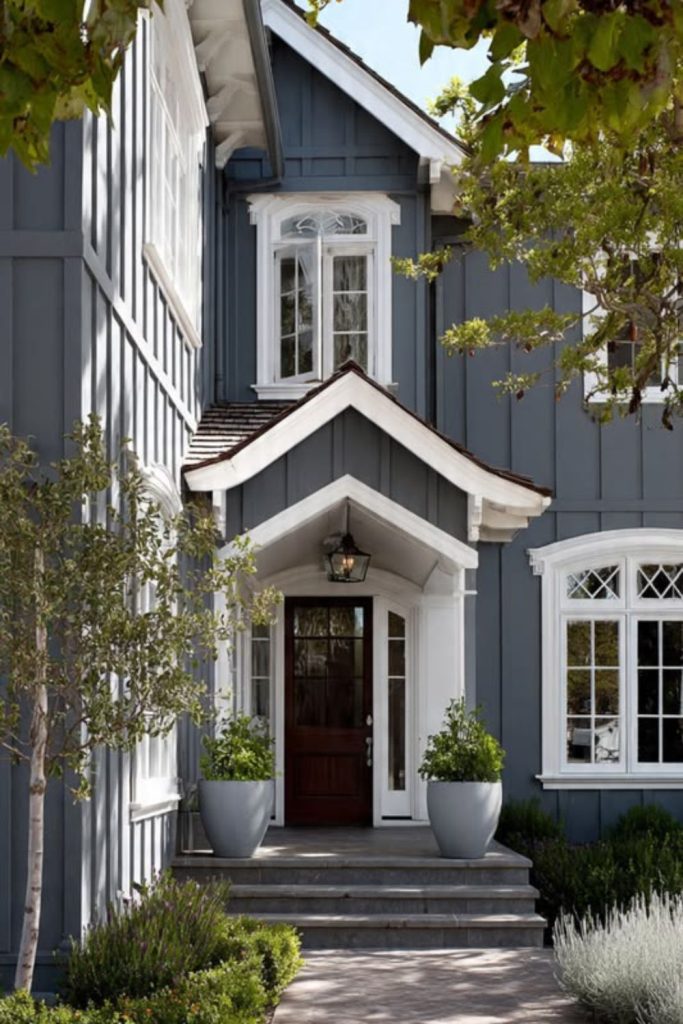
Moody blue gray offers a sophisticated exterior shade with subtle coastal undertones. White trim brightens architectural edges while keeping darker walls visually balanced.
This pairing suits modern cottages, colonial houses, and transitional designs. A natural wood door adds warmth near a cool-toned facade.
Silver or brushed metal fixtures complement its refined appearance. Blue gray creates a calm exterior that feels stylish without excessive drama.
15. Warm Taupe with Cream Trim
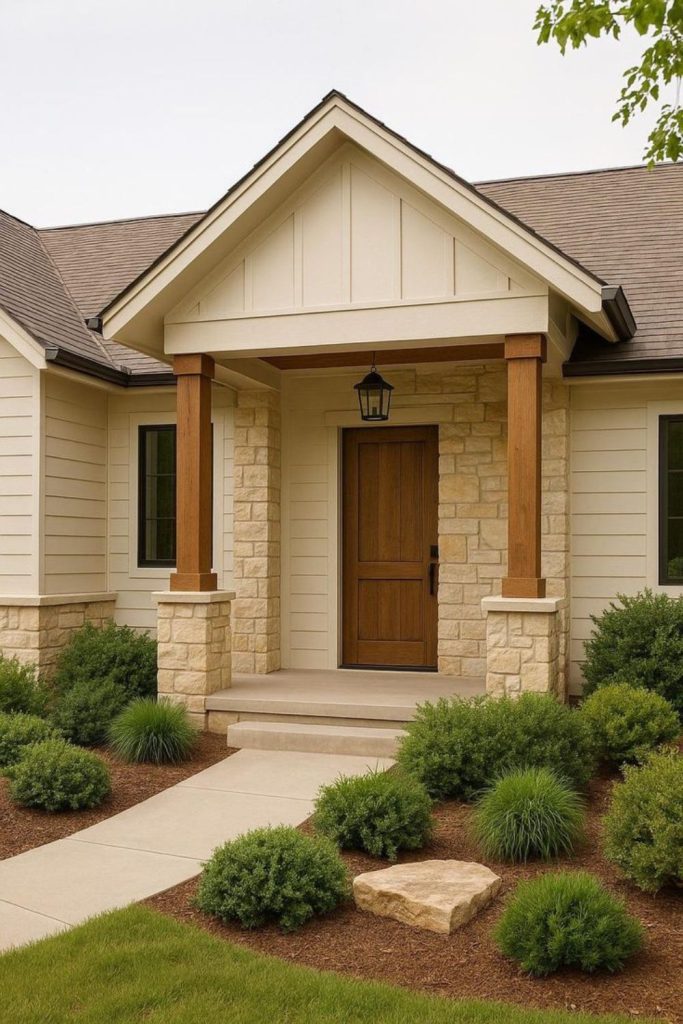
Warm taupe combines beige and gray into a sophisticated neutral exterior. Cream trim provides gentle definition around windows and decorative features.
This palette feels polished across both traditional and contemporary architecture. Dark bronze hardware can add understated richness near entry points.
Stone landscaping naturally reinforces taupe’s earthy personality. For homeowners seeking versatility, this combination offers excellent long-term appeal.
16. Brick Red with Charcoal Accents
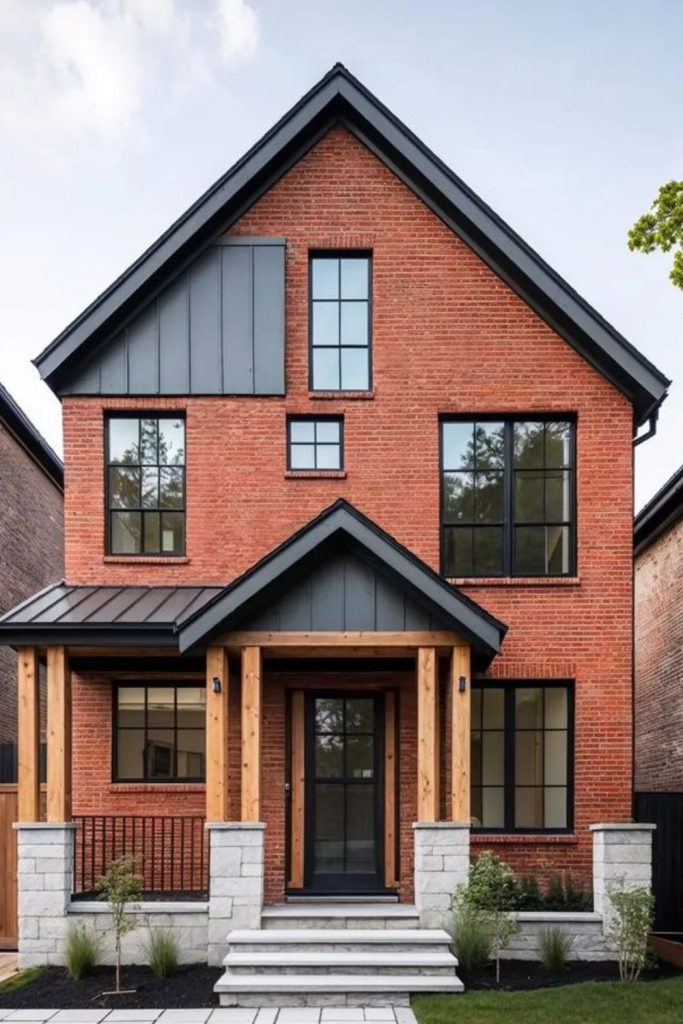
Brick red gives an exterior a grounded appearance with historic architectural character. Charcoal accents modernize this rich shade around shutters, roofing, and doors.
Cream-colored trim can soften stronger red surfaces without competing visually. A timber porch introduces additional texture across larger facades.
Green landscaping provides an appealing natural counterpoint. Brick red works beautifully for traditional houses with substantial architectural details.
17. Misty Green with Natural Stone
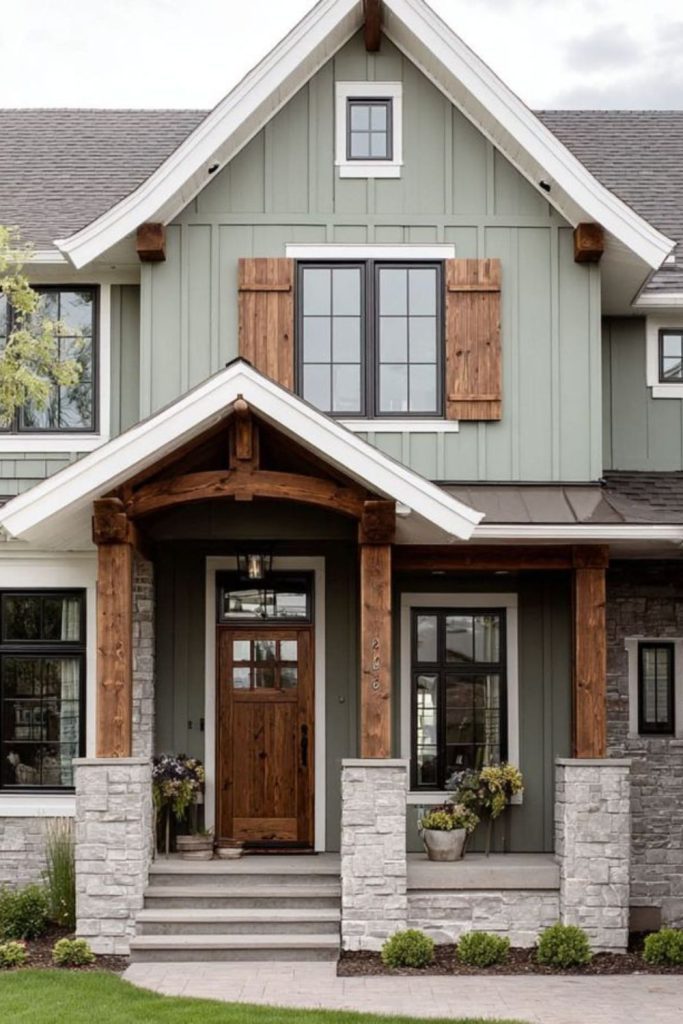
Misty green creates a tranquil exterior inspired by soft woodland landscapes. Natural stone adds rugged texture beneath its delicate color story.
This combination feels organic around cottages, craftsman homes, and garden properties. Cream trim can brighten windows while preserving its peaceful character.
A walnut door adds subtle warmth without overpowering green walls. Misty green offers a refreshing alternative to conventional beige exteriors.
18. Midnight Blue with Warm Wood
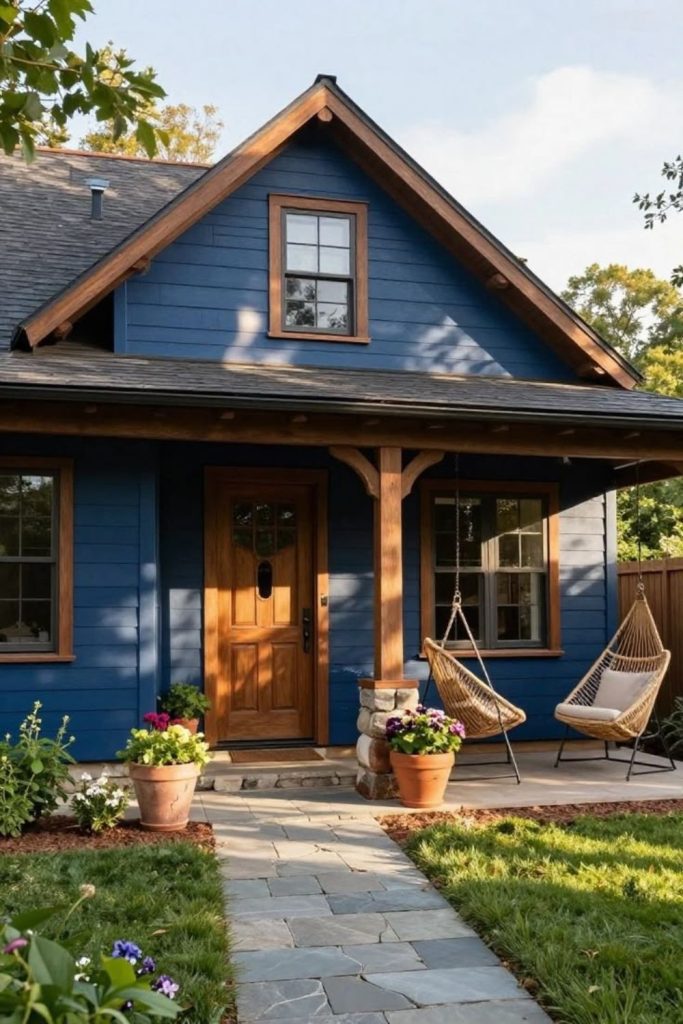
Midnight blue gives a facade an elegant and slightly dramatic personality. Warm wood accents prevent its deep tone from feeling too stark.
This combination looks especially impressive across modern homes with broad windows. Bronze lighting can introduce a refined glow around evening entry spaces.
Pale stone can further soften darker exterior surfaces. Midnight blue creates a sophisticated statement while remaining surprisingly versatile.
19. Soft Peach with Cream White
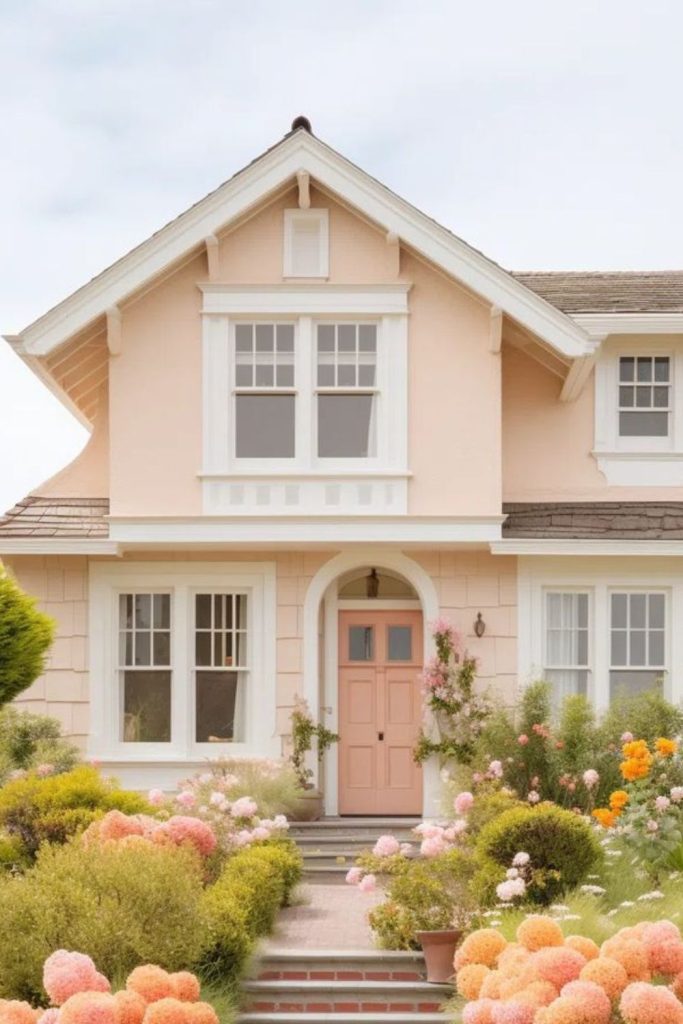
Soft peach brings gentle warmth and a subtle romantic quality outdoors. Cream white trim keeps this playful shade sophisticated rather than overly sweet.
This pairing works beautifully across cottage-style and Mediterranean-inspired architecture. Terracotta planters can reinforce its sunwashed character near entrances.
Dark wood doors provide grounding contrast against lighter walls. Soft peach offers a distinctive exterior palette for homeowners wanting something uncommon.
20. Mushroom Gray with Walnut Brown
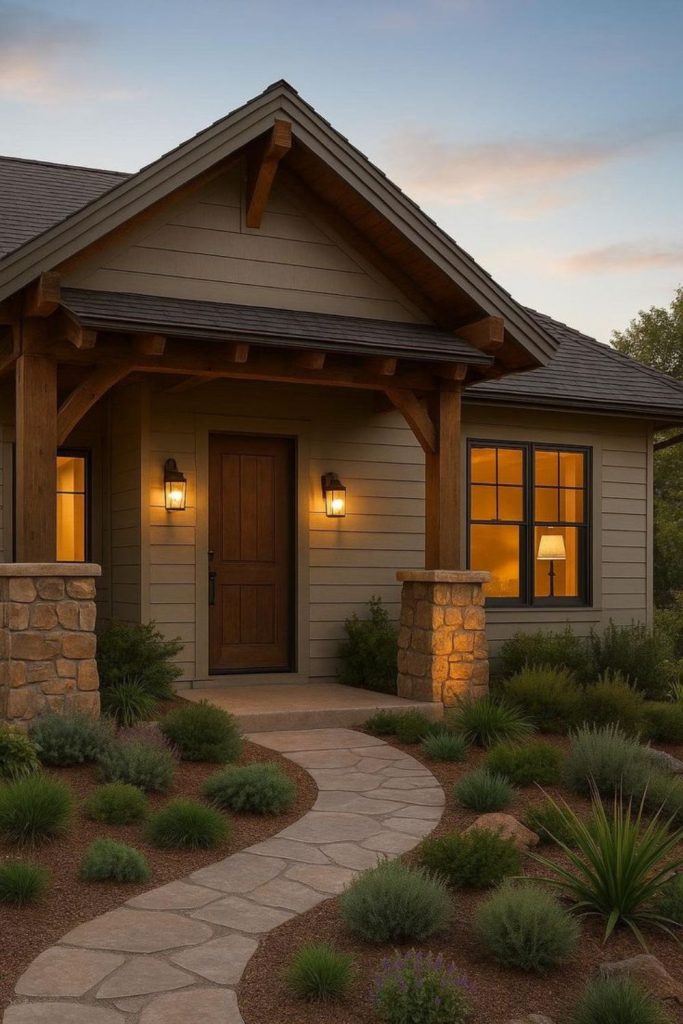
Mushroom gray creates a cozy neutral appearance with earthy sophistication. Walnut brown introduces rich warmth across doors, shutters, and porch details.
Together, these shades feel natural without leaning heavily toward rustic styling. Stone foundations can enhance mushroom gray’s organic undertones.
Bronze hardware blends seamlessly into this restrained palette. This combination feels particularly appropriate for craftsman and transitional homes.
21. Coastal Teal with Sand White
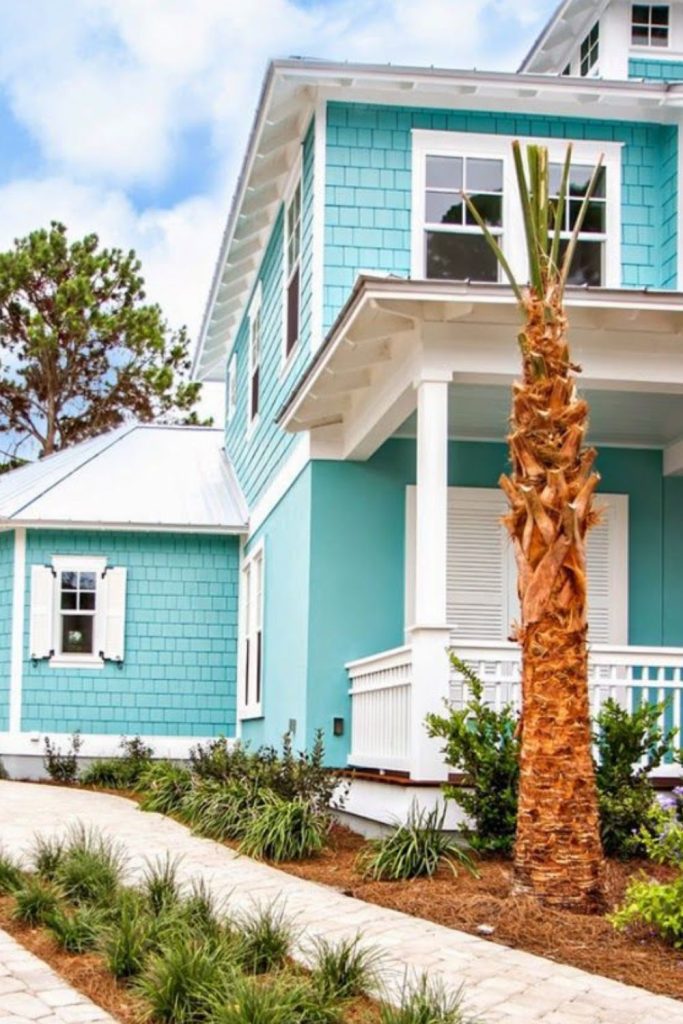
Coastal teal adds personality through a deep blue-green exterior presence. Sand white trim creates a breezy contrast inspired by seaside architecture.
This palette works especially well across homes near gardens, patios, or water. Natural timber details can make teal walls feel warmer and more approachable.
Brass fixtures add a subtle upscale touch near entry areas. Coastal teal creates memorable curb appeal without appearing excessively loud.
22. Espresso Brown with Creamy White
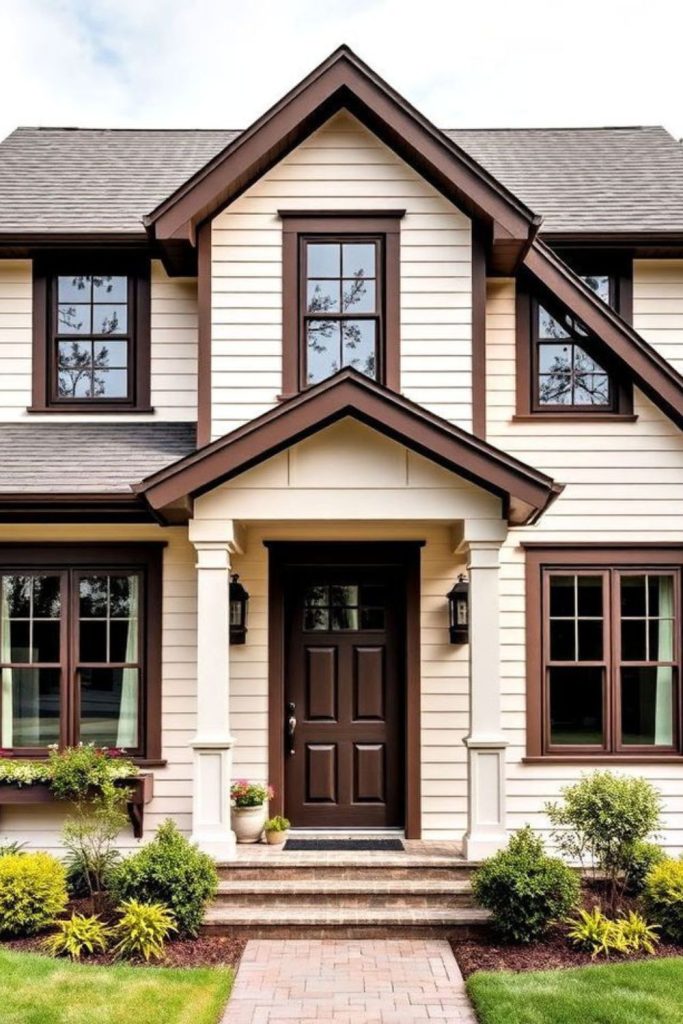
Espresso brown delivers a rich, grounded exterior with sophisticated warmth. Creamy white trim prevents darker surfaces from becoming visually overwhelming.
This pairing looks attractive across large homes with substantial rooflines. Stone columns can reinforce its earthy architectural character.
A black front door creates another layer of depth near entry spaces. Espresso brown feels especially welcoming during autumn and winter months.
23. Lavender Gray with Deep Plum
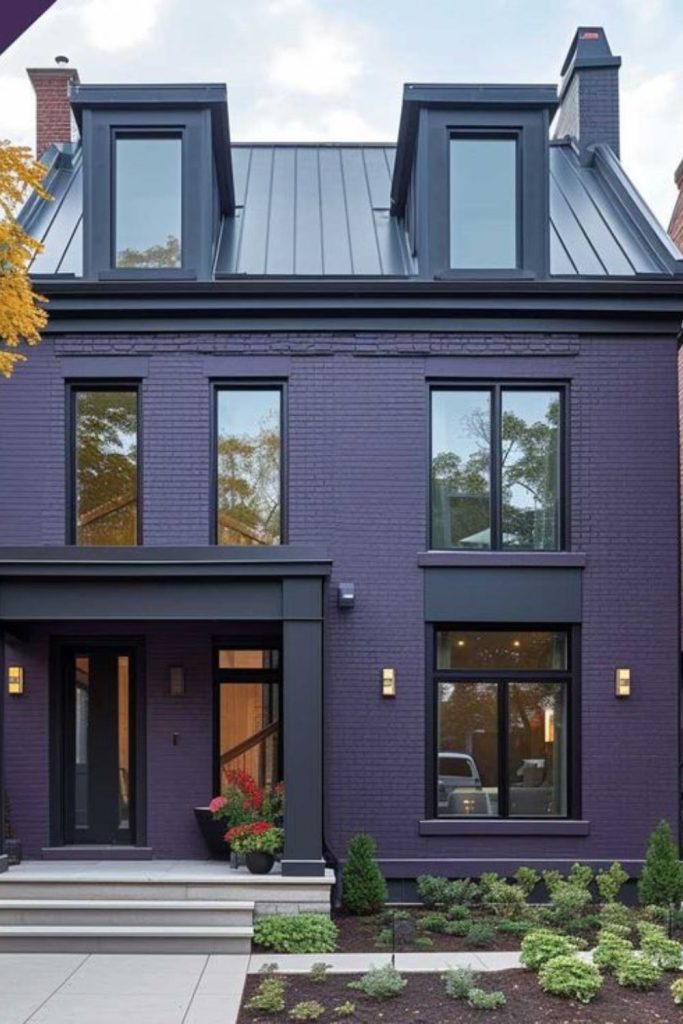
Lavender gray introduces an unusual softness with cool, sophisticated undertones. Deep plum accents create artistic contrast around doors or selected exterior details.
This combination works best when architectural lines remain relatively clean. Silver hardware can reinforce its elegant contemporary character.
Pale landscaping helps maintain visual balance around darker accent areas. Lavender gray offers a distinctive choice for homeowners seeking something outside conventional neutrals.
24. Desert Sand with Rust Brown
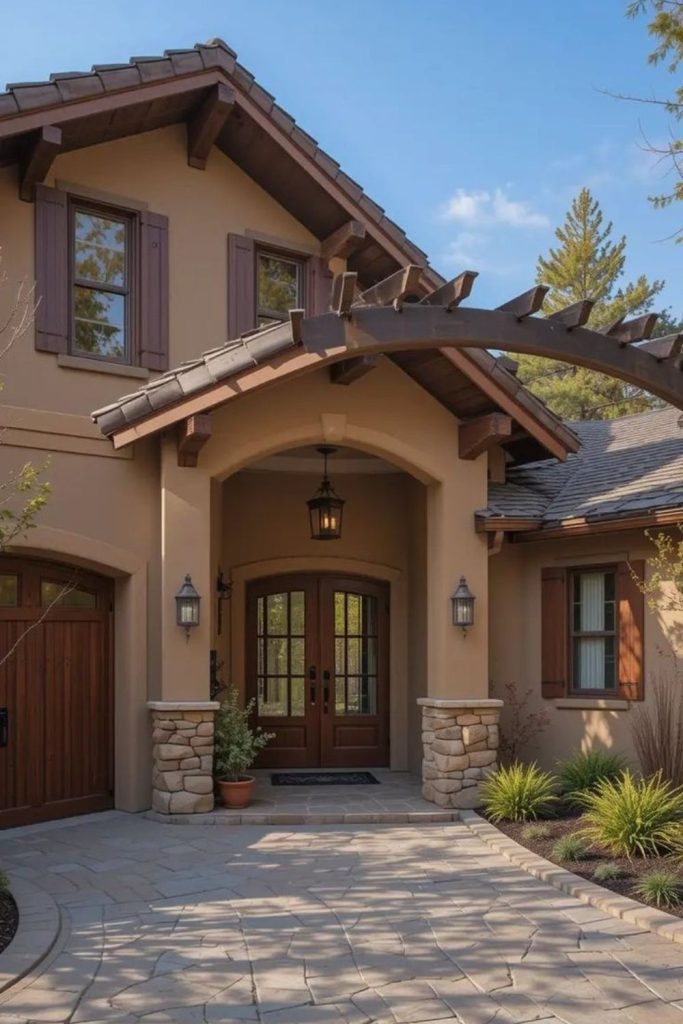
Desert sand creates a sunwashed foundation inspired by arid landscapes. Rust brown adds warmth around doors, beams, shutters, and architectural trim.
This pairing works naturally with stucco, stone, and textured exterior materials. Terracotta pots can strengthen its Southwestern personality near outdoor entrances.
Matte bronze fixtures complement both shades with quiet sophistication. Desert sand creates an inviting facade that feels effortlessly connected with nature.
25. Blackened Green with Ivory
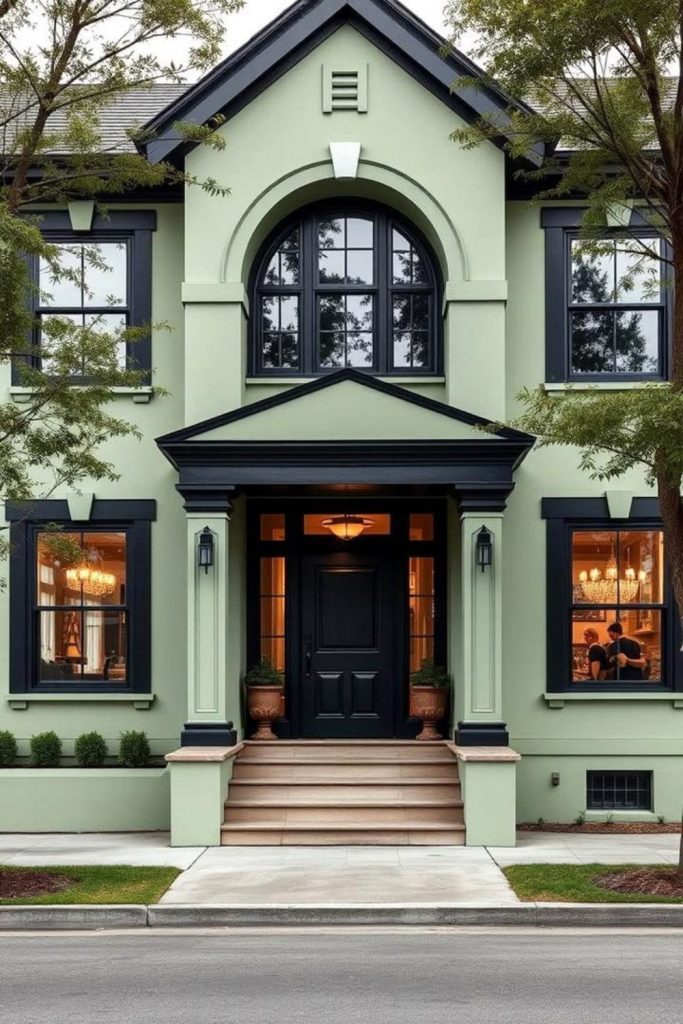
Blackened green creates a deep, mysterious exterior with sophisticated botanical undertones. Ivory trim introduces enough brightness for windows and architectural edges.
This dramatic pairing suits modern cottages and heritage-inspired houses equally well. Natural wood can soften darker surfaces around porches and entrances.
Brass lighting provides a refined glow against deep green walls. Blackened green offers strong curb appeal without relying on plain black paint.
26. Powder Blue with Soft Beige
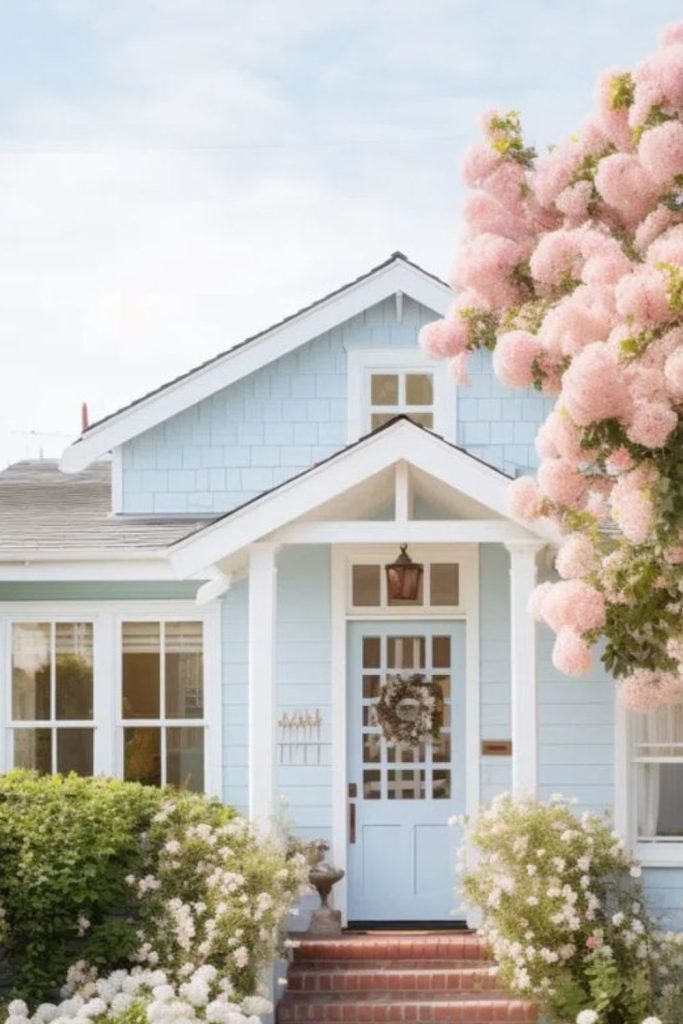
Powder blue gives a house a lighthearted exterior appearance with gentle coastal energy. Soft beige trim warms its cooler undertones and adds visual depth.
This pairing feels charming across cottages, ranch homes, and traditional facades. White flowers and green shrubs complement its airy personality beautifully.
A medium walnut door provides a pleasing natural focal point. Powder blue remains a graceful option for relaxed residential styling.
27. Olive Gray with Charcoal
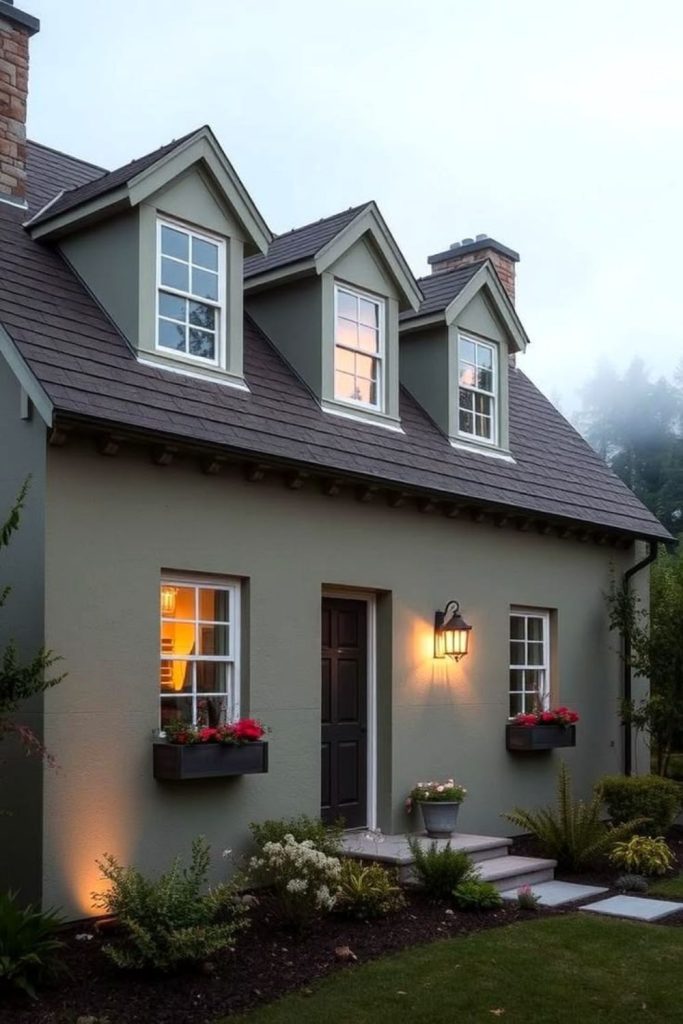
Olive gray blends muted green with gray for a quietly sophisticated facade. Charcoal accents sharpen doors, rooflines, shutters, and exterior window frames.
This combination feels earthy while still carrying a contemporary design language. Stone landscaping can emphasize its subtle natural undertones.
Warm wood elements prevent darker shades from appearing overly austere. Olive gray offers a stylish middle ground between green and neutral palettes.
28. Golden Beige with White
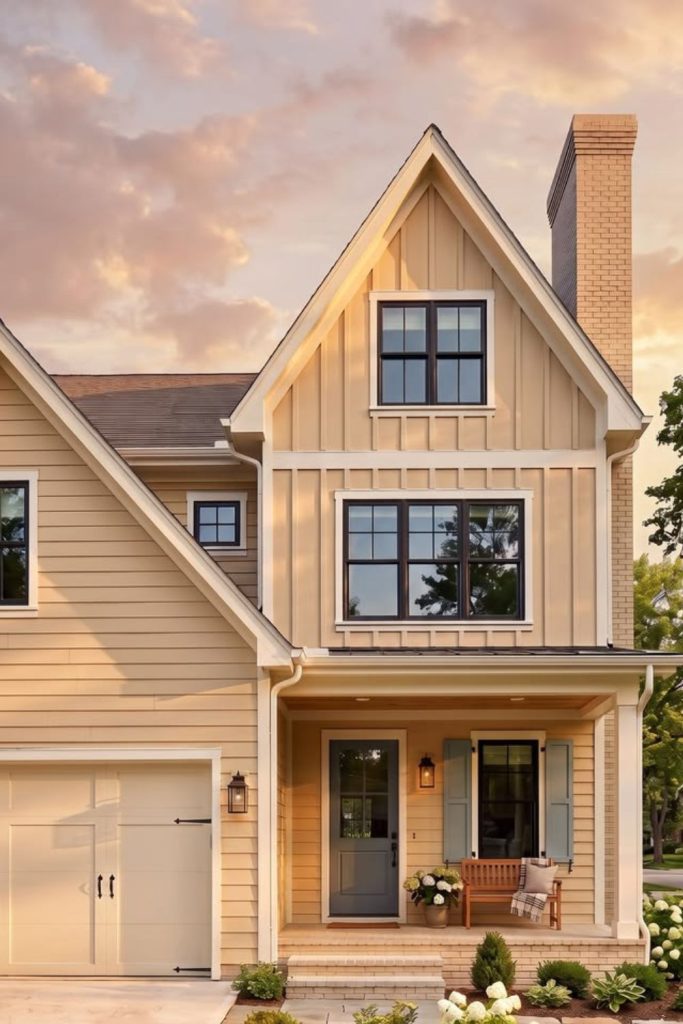
Golden beige adds gentle warmth that becomes especially beautiful beneath afternoon sunlight. White trim creates clean definition around windows, columns, and porch details.
This palette feels welcoming across suburban, farmhouse, and traditional homes. Dark bronze fixtures can add contrast without disrupting its softness.
Green landscaping provides a fresh visual counterpoint around golden walls. Golden beige remains an approachable choice for long-lasting exterior appeal.
29. Slate Blue with Natural Stone
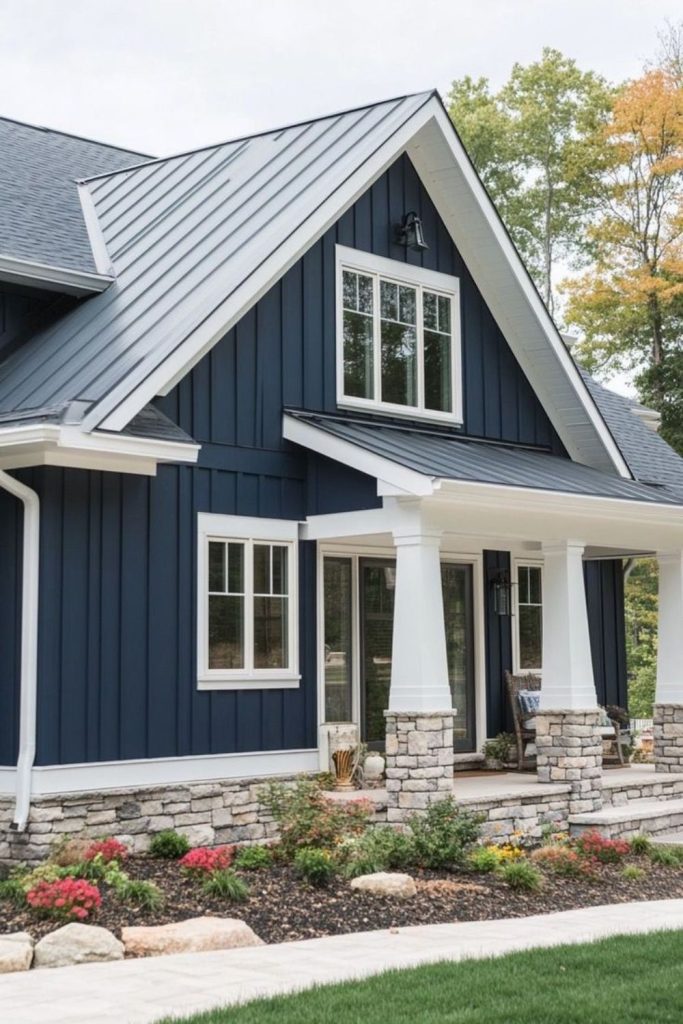
Slate blue creates a cool, architectural facade with understated sophistication. Natural stone introduces texture while balancing its deeper blue-gray character.
This pairing looks excellent across contemporary homes with broad horizontal forms. Warm timber details can prevent its palette from feeling overly cool.
Black fixtures reinforce its modern personality around windows and entry doors. Slate blue offers a polished exterior capable of handling changing design trends.
30. Cocoa Brown with Pale Cream
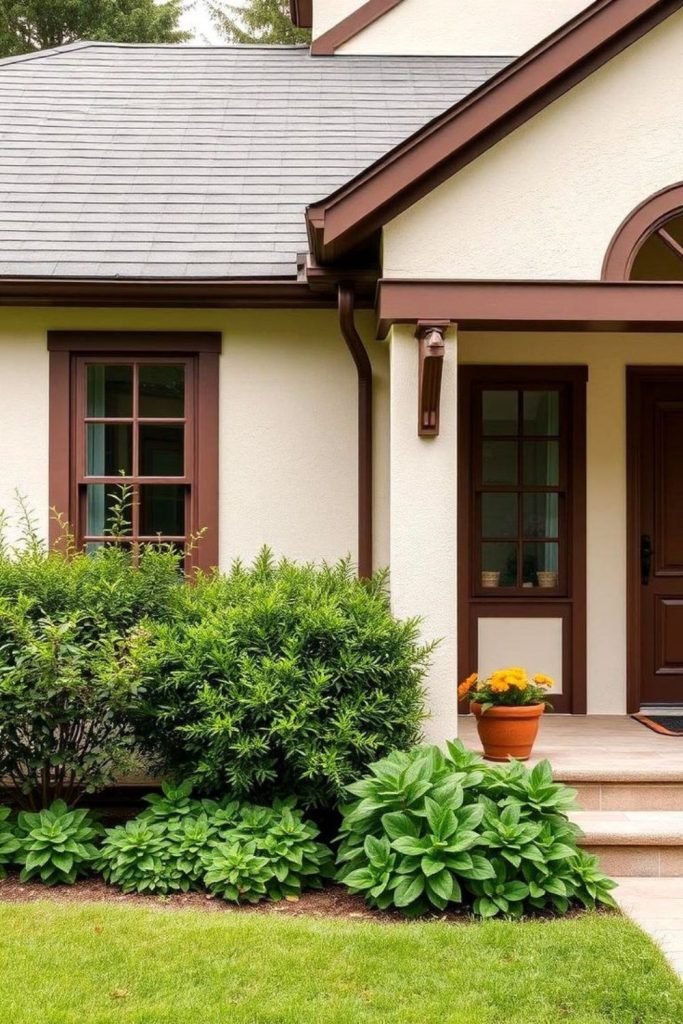
Cocoa brown brings rich warmth across an exterior without appearing excessively dark. Pale cream trim creates soft contrast around windows, porches, and architectural details.
This palette feels especially comfortable across traditional homes surrounded by greenery. Natural stone can add rugged texture near foundations and walkways.
Bronze hardware enhances its warm character with subtle sophistication. Cocoa brown creates a cozy facade that feels established and welcoming.
31. Soft Black with Natural Oak
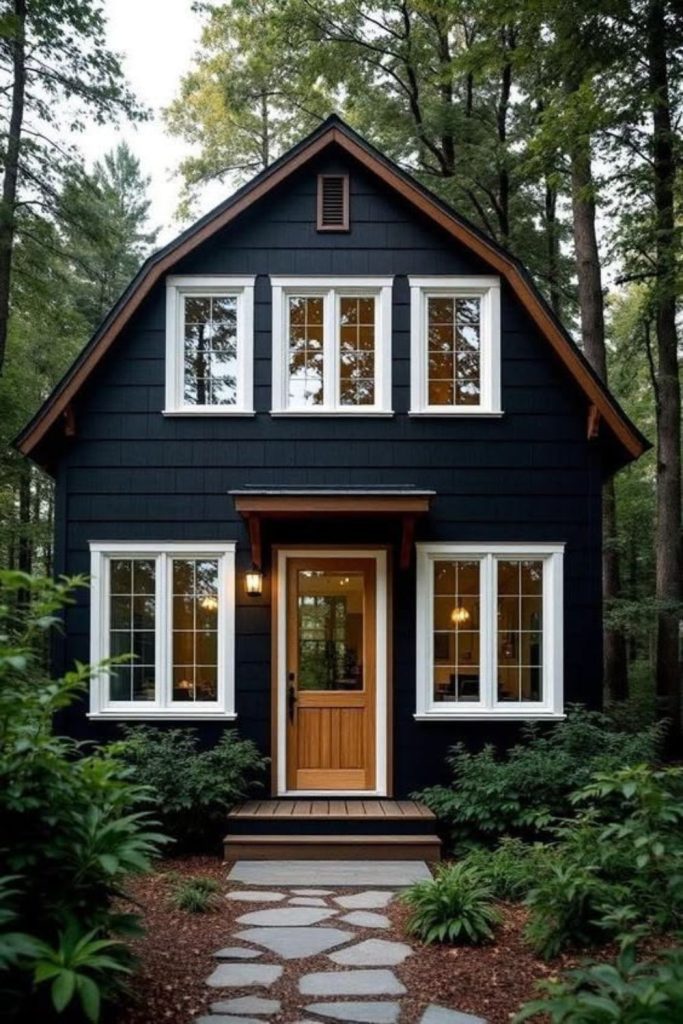
Soft black creates a dramatic exterior while maintaining a slightly gentler appearance than pure black. Natural oak introduces golden warmth across doors, beams, and porch structures.
This high-contrast pairing works beautifully across modern minimalist houses. Large glass panels can amplify its architectural impact through reflective surfaces.
Greenery softens darker walls while adding movement around entry spaces. Soft black and oak deliver a bold yet balanced 2026 exterior.
32. Warm White with Muted Terracotta
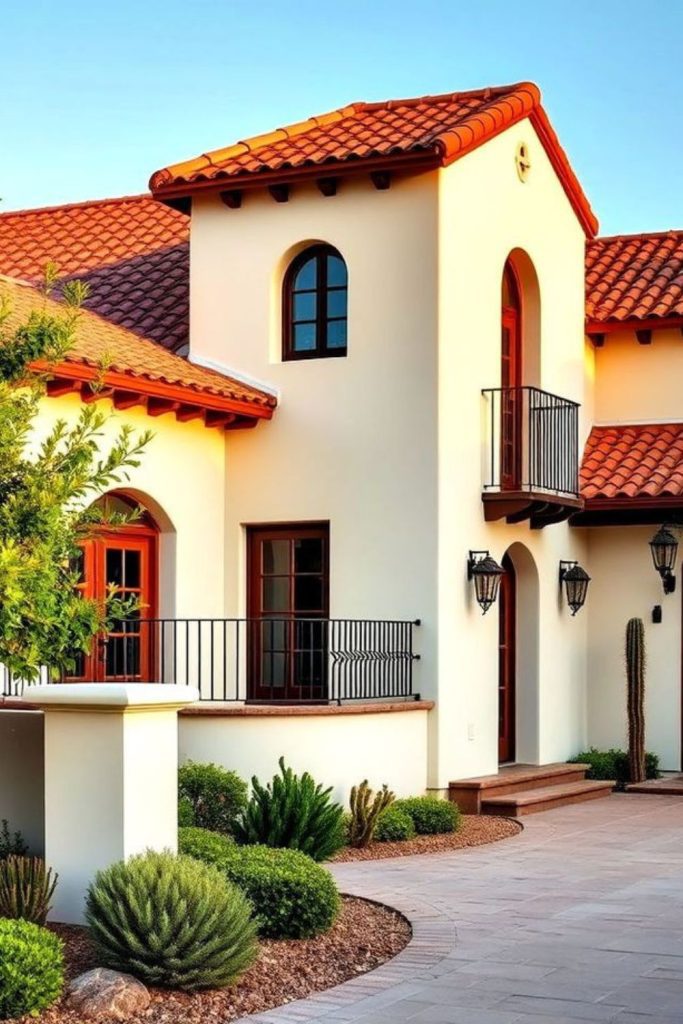
Warm white creates a bright foundation that feels softer than stark architectural white. Muted terracotta adds earthy personality around doors, shutters, or selected exterior sections.
This palette blends beautifully with Mediterranean, farmhouse, and transitional architecture. Natural wood and clay planters can reinforce its relaxed character.
Bronze fixtures provide understated contrast near entrances and outdoor lighting. Warm white with terracotta creates timeless curb appeal with a distinctly modern finish.